
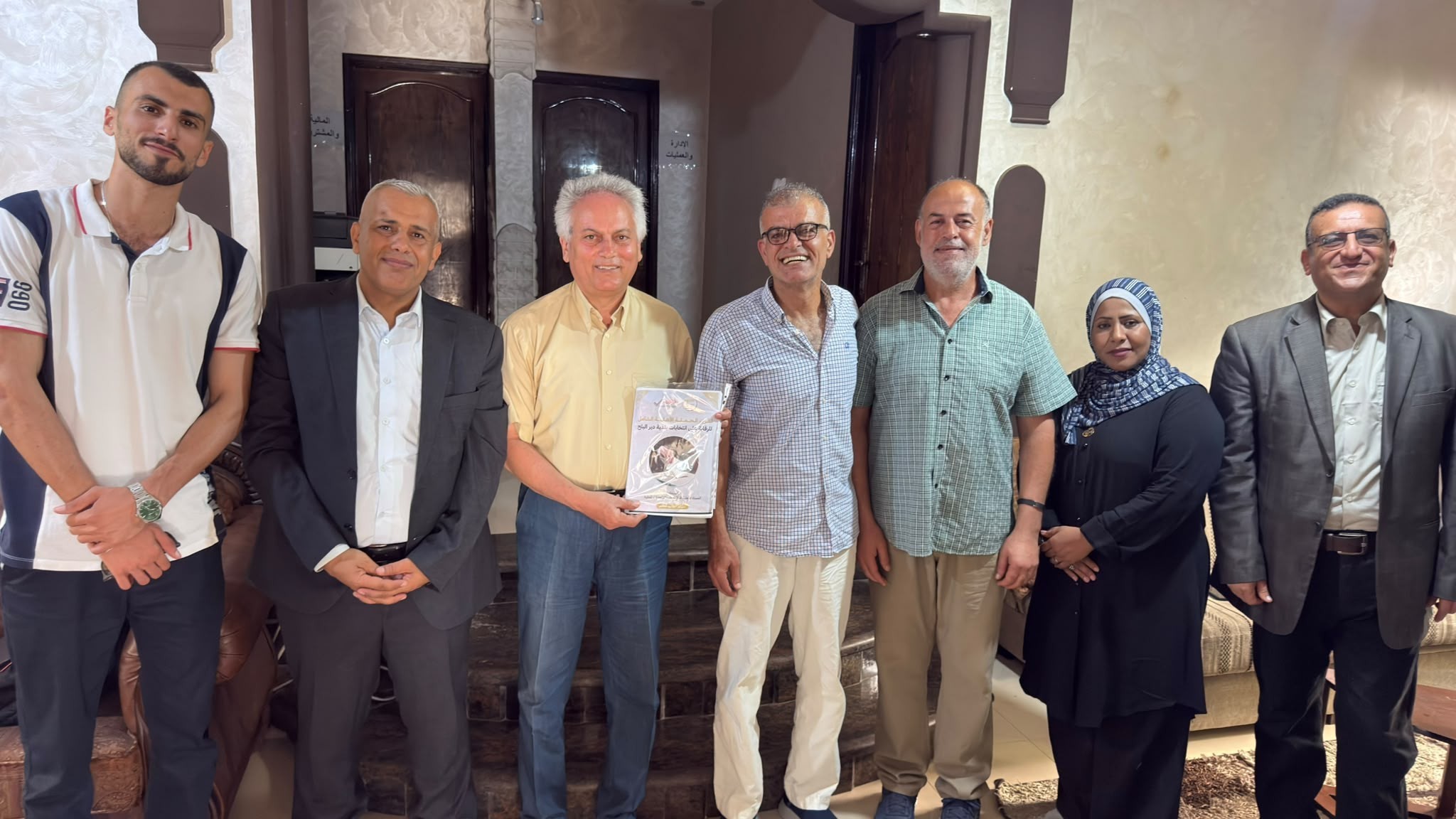
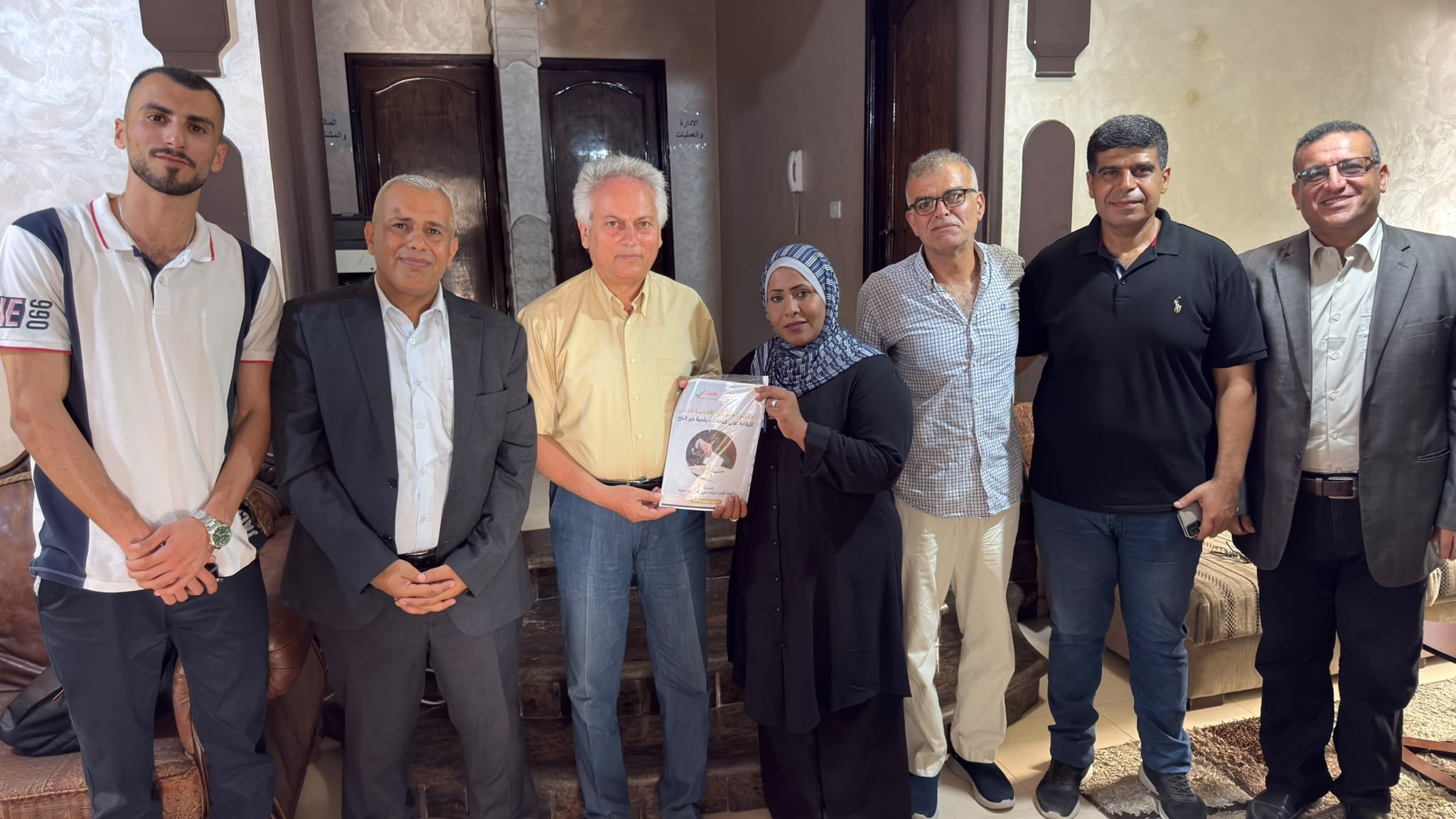
The Civil Campaign for Monitoring Local Elections issued today, Tuesday, 9 June 2026, its comprehensive report on the election observation campaign it conducted during the Deir al-Balah Municipal Elections, which were held on 25 April 2026 under exceptional circumstances resulting from the ongoing genocide and the transformation of Deir al-Balah into a major population center due to displacement. The Campaign submitted its comprehensive report to the Central Elections Commission office in Deir al-Balah.
The report noted that elections enable citizens to choose their representatives, strengthen public confidence in elected bodies, and send a clear message that the Palestinian people remain determined to choose their own representatives and shape their own future. It also affirmed that the Occupied Palestinian Territory constitutes a single political unit despite ongoing attempts by the occupation to fragment it.
The report outlined the establishment of the “Civil Campaign for Monitoring Local Elections,” a coalition of 13 active civil society and human rights organizations operating under the umbrella of the Palestinian NGOs Network (PNGO), supervised by Mr. Samir Zaqout, Deputy Director of Al Mezan Center for Human Rights. The participating organizations are: Al Mezan Center for Human Rights, Al Dameer Association for Human Rights, Haidar Abdel Shafi Center for Culture and Development, Palestinian Agricultural Relief Committees, Women’s Studies Centre, Democracy and Workers’ Rights Center, Gaza Association for Culture and Arts, Qutoof Al-Khair Health and Community Society, Stars of Hope Society for the Empowerment of Women with Disabilities, Society of Women Graduates, Al Mustaqbal Charitable Society, Al Mustaqbal Association for Development and Environment, and Atfaluna Society for Deaf Children.
The report examines Decree-Law No. (23) of 2025 and highlights the procedural measures governing the electoral process, including electoral timelines, the Elections Court, the open-list system, and the women’s quota. It also presents a human rights position regarding some aspects of the law.
The report reviews the various stages of election observation. It notes that monitoring the voter registration process was not possible because the Central Elections Commission was unable to update the voter registry in Deir al-Balah due to wartime conditions and instead relied on the civil registry. It further reviews the nomination phase, during which four independent electoral lists competed for 15 seats without any judicial appeals or objections being filed. Regarding the election campaign period, the report highlights a number of violations, including campaigning before the legally designated period, attacks on campaign materials of competing lists, abuse of official positions and public institutions, as well as an escalation of hate speech and political incitement on social media platforms.
A dedicated section of the report addresses election day and the voting process. It explains that the Central Elections Commission designated 12 polling centers in Deir al-Balah comprising 100 polling stations. Due to the destruction of schools, the Commission replaced them with fiberglass tents and utilized innovative substitute materials such as children's vaccination ink and locally available ballot boxes, as the occupation authorities had prevented the entry of essential election materials and supplies. These measures were made to enable 70,449 registered voters to cast their ballots.
The report concludes with several key findings, most notably that the nomination process proceeded smoothly, with candidate lists submitting their nominations during the final hours of the last day of the nomination period. The Commission approved four electoral lists comprising a total of 60 candidates: Nahdat Deir al-Balah (Renaissance of Deir al-Balah), Mustaqbal Deir al-Balah (Future of Deir al-Balah), Peace and Construction, and Deir al-Balah Unites Us.
The report also details the violations and observations documented by the Campaign. It submitted 180 formal complaints to the Central Elections Commission through its approved electronic complaints system. These complaints were distributed as follows:
- 24 complaints regarding the opening and closing of ballot boxes;
- 44 complaints concerning attempts to influence voters’ choices on election day;
- 16 complaints related to voting procedures for special categories of voters;
- 16 complaints regarding breaches of ballot secrecy;
- 9 complaints concerning disorder and disturbances;
- 15 complaints regarding the presence of armed individuals inside, in front of, or near polling centers;
- 12 complaints concerning the performance of election commission staff;
- 7 complaints regarding the preparedness of polling centers;
- 23 complaints related to technical and logistical issues;
- 11 complaints concerning vote counting and tabulation procedures;
- 5 complaints involving suspected electoral bribery.
The report affirmed that the final election results reflected the free will of the voters despite the violations and irregularities observed, as these violations did not rise to a level that would have affected the overall election outcome. The Civil Campaign also congratulated the winning candidates and lists.
The report recommends that the Council of Ministers and the Central Elections Commission announce the completion and holding of local elections in all municipal and local government bodies across the Gaza Strip, maintain the regular periodicity of elections in accordance with legal timelines, and uphold elections as a means of strengthening political participation, guaranteeing citizens’ right to freely and fairly choose their representatives, and enhancing public oversight.
Furthermore, the report calls on the Central Elections Commission to review all violations and observations documented by the Civil Campaign for Monitoring Local Elections, particularly those related to improving coordination with civil society organizations, addressing shortcomings in technical and logistical preparations, selecting adequately equipped and geographically accessible polling centers that accommodate persons with disabilities and older persons, enhancing training for polling staff, preventing candidates from entering polling centers to conduct campaigning or influence voters, prohibiting armed individuals, security personnel, and private security company employees from entering polling centers, and intensifying public awareness sessions on the Elections Law and voting procedures.

End.


