
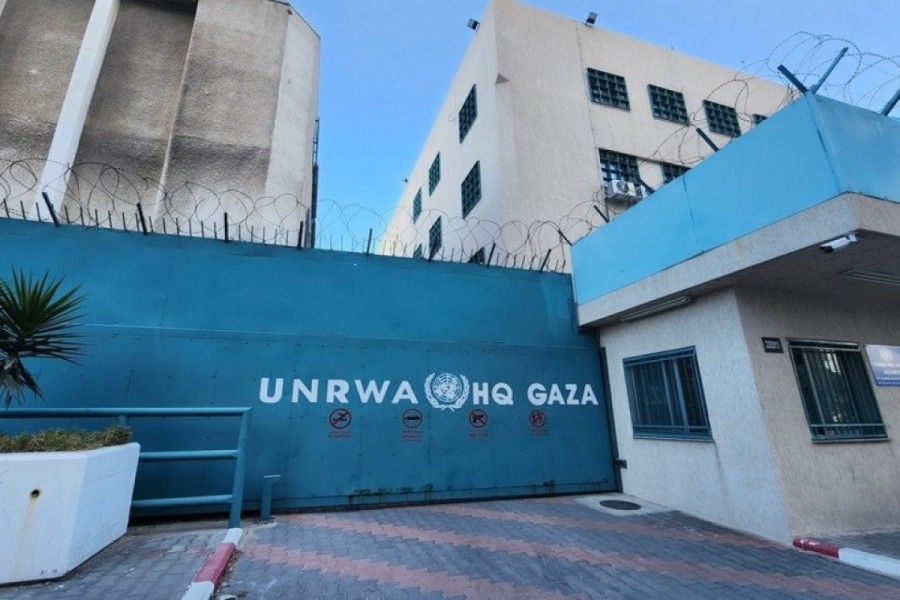
The world was taken by surprise by a post published on the X platform on Wednesday, 1 July 2026, in which the so-called "Peace Council" declared that there would be no place for the United Nations Relief and Works Agency for Palestine Refugees in the Near East (UNRWA) in the future of the Gaza Strip. The Council claimed that it sought to end what it described as the continued dependency on aid, asserting that the people of Gaza deserve more than humanitarian assistance.
This position represents a continuation of the approach adopted by the international community in denying the Palestinian people's right to self-determination, following the adoption by the United Nations Security Council of Resolution 2803 on 17 November 2025, which endorsed U.S. President Donald Trump's 20-point plan to end the "conflict" in Gaza. The plan, originally issued on 29 September 2025 and endorsed at the Sharm El-Sheikh Summit on 13 October 2025, was followed by the establishment of the so-called "Peace Council," the National Committee for the Administration of Gaza, and other related bodies.
This decision has shocked international law experts and human rights practitioners alike, as it constitutes a serious departure from the Charter of the United Nations, established principles of international law, and fundamental human rights standards. It is inconceivable that the Security Council would adopt a resolution that disregards dozens of resolutions issued by the United Nations, its organs, and specialized agencies, while simultaneously violating one of the most fundamental principles of international law “the right of peoples to self determination”.
The Peace Council's statements regarding UNRWA come at a time of unprecedented humanitarian deterioration in the Gaza Strip, resulting from the continued targeting of Palestinian civilians and their public and private property, the destruction of vital infrastructure, commercial and industrial facilities, and the ongoing blockade that deprives civilians of essential supplies, particularly food and medical assistance. Consequently, public health conditions have sharply deteriorated, diseases and epidemics have spread, and poverty, unemployment, and food insecurity have reached alarming levels.
UNRWA provides indispensable services throughout the Gaza Strip and plays a critical role in promoting stability through its interventions in human development, humanitarian assistance, primary and vocational education, primary healthcare, relief and social services, infrastructure, camp improvement, microfinance, and emergency response.
At a time when Palestinian refugees are in greater need of UNRWA than ever before, the occupying Power has intensified efforts to undermine the Agency by targeting its facilities and personnel. It has also prevented UNRWA from bringing into Gaza food supplies that had been prepositioned outside the Strip and were sufficient to meet the needs of hundreds of thousands of people.
In an unprecedented legal measure, on 28 October 2024 the Israeli Knesset enacted two laws prohibiting UNRWA's activities in areas that Israel considers to fall under its sovereign territory, including East Jerusalem. These laws prohibit all contact between Israeli officials and UNRWA. Since the end of January 2025, the Israeli authorities have refused to issue permits or entry visas to UNRWA's international staff to enter the Occupied Palestinian Territory, including the Gaza Strip.
Despite the severe operational consequences of the Israeli measures, restrictions, and unprecedented challenges, UNRWA continues to strive to deliver its services and humanitarian interventions to those affected by the ongoing crisis. According to the Agency's latest situation report covering the period from 24 to 30 June 2026, UNRWA continued operating six health centres, in addition to four temporary health centres and 28 medical points across the Gaza Strip.
During this reporting period, approximately 69,000 medical consultations were provided. Around 6,000 metric tons of solid waste were collected and transported to temporary dumping sites, while nearly 79 million litres of drinking and domestic water were distributed daily. Thousands of displaced persons benefited from psychosocial support and learning activities. Protection services were also provided to 4,813 survivors of gender-based violence and 7,353 children, including 3,350 unaccompanied children. However, UNRWA was unable to distribute food parcels during this period due to the continued prohibition on the entry of humanitarian supplies into Gaza. The Agency also continued monitoring and tracking population displacement throughout the Strip[1].
It is important to recall the Advisory Opinion of the International Court of Justice, issued on 19 July 2024, concerning the legal consequences arising from Israel's policies and practices in the Occupied Palestinian Territory, including East Jerusalem.
In its Opinion, the Court concluded that Israel's continued occupation of the Palestinian territory is unlawful and that Israel is under an obligation to bring its unlawful presence in the Occupied Palestinian Territory to an end as rapidly as possible. The Court further held that Israel must immediately cease all settlement activities, evacuate all settlers from the Occupied Palestinian Territory, and make full reparation for the damage caused to all Palestinians and affected legal persons.
The Court further affirmed that the Occupied Palestinian Territory (including the West Bank, East Jerusalem, and the Gaza Strip) constitutes a single territorial unit, whose unity, integrity, and continuity must be preserved. It also recognized that Israel's policies have fragmented the Palestinian people, despite the fact that the right to self determination protects peoples from measures aimed at dividing their population or undermining their integrity as a people.
The Court's Opinion is founded upon two fundamental principles of international law: the prohibition on the acquisition of territory by force and the prohibition on denying peoples their right to self-determination. Consequently, all measures undertaken by Israel in the Occupied Palestinian Territory are unlawful, and Israel can no longer be regarded as exercising any legitimate substitute authority in place of the Palestinian authorities.
These legal conclusions equally apply to the decisions of the so called "Peace Council" and indeed to the Council's very existence, so long as it fails to take meaningful steps to end Israel's occupation of the Palestinian territory and to enable the Palestinian people to freely exercise their right to self determination[2].
By disregarding these established legal principles, both the so called "Peace Council" and the aforementioned Security Council resolution violate the right of peoples to self determination, a right firmly enshrined since the founding of the United Nations, including in Article 1(2) of the UN Charter and Article 55 of Chapter IX concerning international economic and social cooperation.
Al Mezan Center for Human Rights reaffirms the significance, value, and legal status of the right to self-determination as a cornerstone of international relations and an indispensable foundation for the protection and realization of human rights.
The Center stresses that the so-called "Peace Council" has taken no meaningful action to end the ongoing genocide in the Gaza Strip or the policies of ethnic cleansing being carried out throughout the Occupied Palestinian Territory. Rather, it has played a questionable role in containing the growing international outrage over the genocide while simultaneously enabling the Israeli occupying forces to continue their military campaign and expand their control over the Gaza Strip.
At the time the Trump Plan was adopted, Israeli forces controlled approximately 50% of the Gaza Strip. Following the conclusion of the first phase of the agreement, they continued to expand their control to more than 62% of the territory and publicly announced their intention to establish effective control over 70% of the Gaza Strip. This would confine more than 1.8 million displaced Palestinians to the remaining one-third of the Strip, forcing them to survive under siege and in conditions devoid of the most basic necessities and essential humanitarian services.
Meanwhile, Israeli occupying forces have continued their campaign of aerial bombardment, demolition, widespread destruction, and unlawful killings, while imposing severe restrictions on the entry of humanitarian aid, relief supplies, and other items indispensable for the survival of hundreds of thousands of civilians. These measures include the continued denial of electricity, the prohibition on the entry of spare parts and lubricants for generators and engines, and the blocking of fuel supplies. Such practices provide clear evidence of the true objectives underlying the so-called "Peace Council" and the Trump Plan.
The Center further notes that the Peace Council's position aligns with Israel's longstanding efforts to dismantle UNRWA. It appears that eliminating the Agency was among the commitments made by the U.S. President to Israel, particularly given the suspension of U.S. funding to UNRWA during his first administration.
Despite repeated attempts to discredit UNRWA by alleging that it has failed to maintain neutrality, Israel (supported by the United States, its partner in the ongoing genocide) has failed to produce any credible evidence demonstrating that the Agency has acted outside the scope of its mandate.
UNRWA's professionalism, impartiality, and objectivity are not matters of debate. They are consistently affirmed by the testimony of United Nations agencies and national and international organizations operating on the ground, all of which recognize that UNRWA provides indispensable services to the refugee community, which constitutes more than 70% of the Palestinian population in the Gaza Strip.
The Center emphasizes that UNRWA's mandate will end only when Palestinian refugees are able to exercise their right of return to the homes from which they were forcibly displaced, together with the realization of their other inalienable rights, foremost among them their right to self determination.
Accordingly, Al Mezan Center for Human Rights strongly condemns the decision of the so called "Peace Council" to terminate UNRWA's role in the Gaza Strip and calls upon the international community, both collectively and individually, to protect the Agency and provide it with the political and financial support necessary to enable it to continue fulfilling its vital humanitarian mandate.
The Center further stresses that the only path toward peace and stability in the region begins with ending the genocide that has been waged against the Gaza Strip for more than one thousand days, bringing Israel's unlawful occupation of the Occupied Palestinian Territory to an end, implementing the findings of the International Court of Justice's Advisory Opinion, and ensuring accountability for perpetrators of international crimes, particularly those against whom arrest warrants have been issued by the International Criminal Court.
End
[1] UNRWA Situation Report #228 on the Humanitarian Crisis in the Gaza Strip and the Occupied West Bank, including East
[2] United Nations Charter https://www.un.org/en/about-us/un-charter/full-text


