
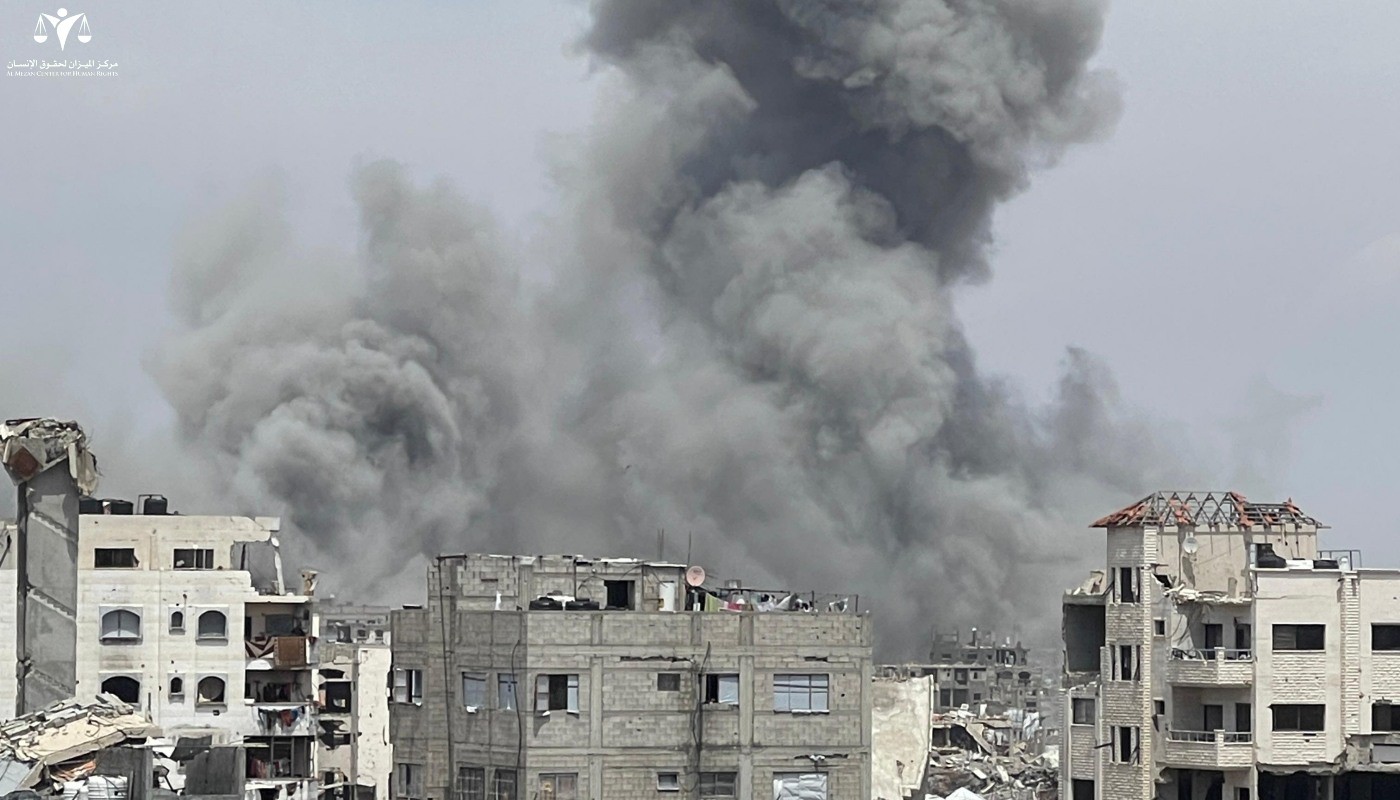
Al Mezan Center for Human Rights strongly condemns the continued perpetration of the genocidal war by the Israeli occupation forces against civilians in the Gaza Strip, despite the ceasefire agreement and the Cairo understandings aimed at ending the war and initiating the implementation of the roadmap. The Center stresses that the continued Israeli escalation, through direct bombardment and deliberate gunfire targeting civilians and the eastern areas of the Gaza Strip, the systematic destruction of infrastructure and civilian objects in areas under the control of the occupation forces, the continued imposition of a suffocating blockade and deprivation of the population of the most basic necessities of life and their right to access healthcare, as well as deliberate restrictions on the entry of humanitarian aid and commercial supplies through the crossings, reflects a determination to continue targeting civilians and deepening their suffering, pushing the Gaza Strip towards unprecedented levels of humanitarian catastrophe.
According to field information, an airstrike targeted a group of civilians travelling on a three-wheeled vehicle (tuk-tuk) at around 17:45 yesterday, Wednesday, 12 August 2026, near the western roundabout in Beit Lahia, northern Gaza Strip, killing one civilian and injuring others. In the same context, the occupation forces have continued, over the past several days, to open fire from military vehicles towards the eastern areas of the Gaza Strip, particularly Al-Bureij Refugee Camp in central Gaza. Several injured persons arrived at Al-Awda Hospital on the same evening after sustaining gunshot and shrapnel wounds. In addition, two injured persons arrived at Nasser Hospital after being targeted by gunfire from a quadcopter drone in the Garage Rafah area in central Khan Younis.
According to the Palestinian Ministry of Health, the number of Palestinians killed has risen to 1,260, while 4,154 have been injured since the signing of the ceasefire agreement in Sharm El-Sheikh and its entry into force on 11 October 2025.[1]
A resident of Al-Bureij area in central Gaza, identified as (R.H.), stated: “I am married and have five children. Around 50 displaced relatives are staying in my home. We live east of Deir al-Balah Governorate, near the Yellow Line, because there is no alternative place for me and my family. Gunfire continues throughout the day in the eastern areas and is fired randomly towards our homes. We are afraid to leave the house because of the indiscriminate gunfire. At night, the sound of tanks is very close, and military vehicles move towards our homes and then return. Fear still controls our lives, and almost every day, one of our neighbours or passers-by is injured by gunfire.”
The humanitarian situation in the Gaza Strip continues to deteriorate as the Israeli occupation forces persist in obstructing the entry of humanitarian aid. Displaced persons in the Gaza Strip are facing a severe deterioration in humanitarian conditions, particularly environmental and health conditions inside overcrowded displacement camps, due to the accumulation of waste in their vicinity, the shortage of clean drinking water and water for personal use, and the absence of infrastructure and sewage networks. These conditions have created a fertile environment for the spread of rodents and insects and the proliferation of pests and diseases, posing a genuine threat to the lives of the entire population, particularly during the summer and amid rising temperatures, while the entry of chemicals necessary to control these insects, rodents and pests continues to be prevented.
Farhan Haq, Spokesperson for the United Nations, stated:
“Israeli military operations across the Gaza Strip are putting Palestinians at risk and driving up critical humanitarian needs”, "humanitarian partners stress that a broader range of essential supplies and specialized equipment must be allowed into Gaza to expand these life-saving services and reduce the risks faced by civilians, including children, as well as humanitarian workers," .
The United Nations Nutrition Cluster conducted a survey in Gaza to gain a better understanding of malnutrition levels across the Strip, covering approximately 83% of the population. The survey found that 1.3% of children suffer from acute malnutrition. Maternal malnutrition reached 9.4% among non-pregnant and non-breastfeeding women, and 7.2% among pregnant and breastfeeding women.[2]
Furthermore, 37.1% of children suffer from diarrhoea and 31.9% from fever, particularly amid high temperatures, inadequate access to healthy food, and the lack of clean water suitable for drinking and use. Only 30.3% of children aged between six and 23 months receive the minimum dietary diversity, while only 22.4% receive the minimum acceptable diet.[3] These figures do not indicate a decline in or an end to malnutrition. Rather, while more severe outcomes have not been recorded, dietary diversity remains inadequate, diseases continue to spread, particularly among children, and alternatives or nutritional supplements for children and mothers remain unavailable. There is an urgent need to facilitate their entry and improve general hygiene and access to clean water.
A woman identified as (Z.M.), a mother of four children and responsible for meeting their needs, stated: “Quite frankly, we are still living through famine despite the opening of the crossings and the entry of some goods into the Gaza Strip. Before the truce began and the crossings were opened, the entire population experienced famine conditions due to the lack of food supplies and the prevention of the entry of goods of all kinds, in addition to the limited and insufficient humanitarian assistance. Now, with some goods being allowed into the Strip, the markets are full of different types of food, but I, like many others, cannot afford to buy them because of the significant rise in prices and because our savings and financial resources were exhausted during the years of war and displacement. We no longer have enough to meet the basic needs of our families.”
Amid the continuing shelter crisis, approximately 250,000 families remain living in tents, 60% of which are dilapidated and fail to meet the requirements for dignified living.[4] The entry of caravans also continues to be obstructed. While caravans are not an alternative to reconstruction, they constitute a temporary necessity to facilitate the transition from dilapidated tents that provide no adequate protection from weather conditions and fail to ensure privacy.
The occupation authorities continue to impose restrictions on the entry of goods and humanitarian assistance. The ceasefire agreement provides for the entry of 600 humanitarian aid trucks into the Gaza Strip every day; however, far fewer trucks than agreed upon are entering the Strip, and the quantities remain insufficient to meet humanitarian needs. The majority of the trucks entering are commercial rather than humanitarian aid trucks. The Israeli side also imposes additional obstacles through inspection and verification procedures and the return of some trucks.
Al Mezan Center for Human Rights strongly condemns the ongoing Israeli crimes, the targeting of civilians, civilian objects and infrastructure in the Gaza Strip, and the prevention and obstruction of the entry of humanitarian aid, which further deteriorate humanitarian and health conditions as a form of collective punishment and an aspect of the genocide being perpetrated by the occupation forces.
Accordingly, the Center calls on the international community to take effective action and exert pressure on the occupation forces to halt the crime of genocide, allow the entry of humanitarian aid, fuel and medical equipment, provide displaced persons with personal hygiene supplies and health materials, ensure access to clean and safe water, and address the shelter crisis.
[1] Palestinian Ministry of Health
[2] Humanitarian Situation Report | 7 August 2026
[3] Humanitarian Situation Report | 7 August 2026
[4] Statement by Eng. Maher Salem, Director General of Housing.


