
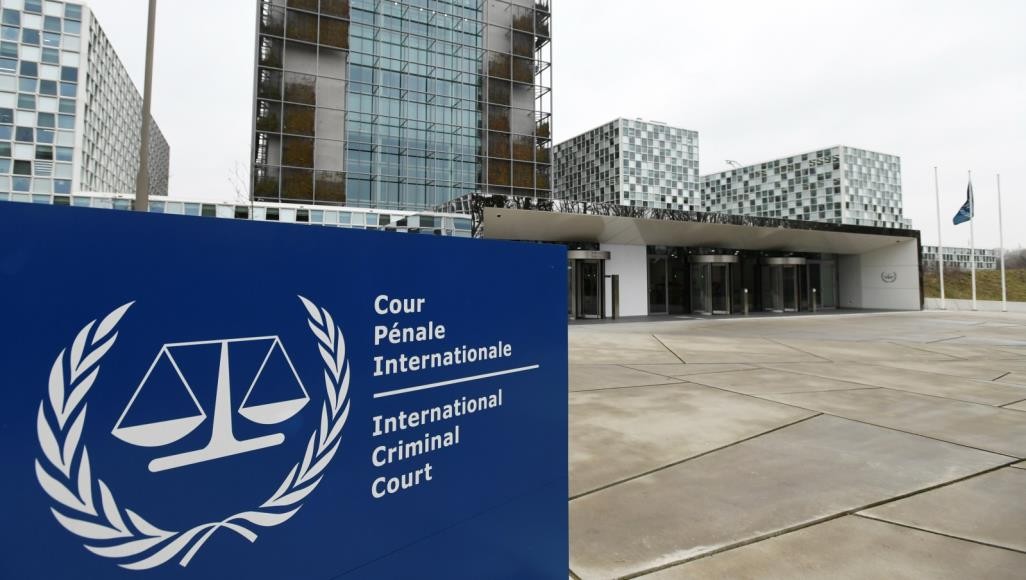
Al Mezan Center for Human Rights strongly condemns the decision of the US Department of the Treasury to resume imposing sanctions on the International Criminal Court (ICC), considering this a grave assault on the independence of international justice and a serious obstruction of the work of the judicial body mandated to uphold international law, advance international justice, and provide redress to victims of the most serious crimes known to humankind, for which nations have unanimously recognized the imperative of holding perpetrators accountable and preventing impunity.[1]
The decision is deeply alarming and deplorable, particularly given that the United States, as a permanent member of the UN Security Council entrusted with the maintenance of international peace and security, continues to impose sanctions on ICC judges. Such measures constitute blatant interference with judicial independence and seriously undermine the Court’s ability to discharge its mandate. They risk prolonging victims’ suffering, undermining their hopes of obtaining justice and protection, and creating further space for perpetrators of international crimes to evade accountability, thereby weakening the international justice system and entrenching a logic of impunity and the rule of force at the international level.
According to Al Mezan’s monitoring, on Tuesday, 18 August 2026, the US Department of the Treasury imposed new sanctions on ICC President Tomoko Akane and ICC Deputy Prosecutor Abdullah Sei, including the freezing of their financial assets, exclusion from the US financial system, and a ban on entering US territory. These measures represent a serious overreach of US authority and an unlawful assault on the international order, which establishes the respective rights and obligations of states to respect international law through binding legal instruments that cannot be derogated from.
The new sanctions expand the scope of measures previously imposed by the United States against the ICC, UN bodies, and Palestinian human rights organizations. Previous sanctions targeted six judges: Gocha Lordkipanidze of Georgia, Erdenebalsuren Damdin of Mongolia, Canadian Judge Kimberly Prost, French Judge Nicolas Guillou, and Deputy Prosecutors Nazhat Shameem Khan of Fiji and Mame Mandiaye Niang of Senegal. They also targeted Francesca Paola Albanese, the UN Special Rapporteur on the situation of human rights in the Palestinian territories occupied since 1967, as well as three Palestinian human rights organizations: Al Mezan Center for Human Rights, the Palestinian Centre for Human Rights, and Al-Haq.
These sanctions are being imposed while Palestinians in the Gaza Strip continue to endure the most extensive genocidal campaign witnessed in modern history. Israeli forces have killed more than 73,000 Palestinians, destroyed more than 80% of buildings across the Gaza Strip, and seized control of approximately 70% of the territory. They have devastated the agricultural, health, cultural, and environmental sectors and critical infrastructure, forcing hundreds of thousands of Palestinians to live displaced and overcrowded in tents under appalling conditions, without the minimum necessities for a dignified human life. They have also imposed a stringent blockade on the entry of humanitarian assistance and prevented patients and wounded persons from travelling to receive medical treatment.
The genocidal war could not have continued with such brutality without the failure and complicity of the international community, particularly powerful states seeking to exert their influence over the international order and, in particular, over institutions entrusted with upholding international law and serving as a cornerstone of the international justice system for accountability, such as the ICC. This has encouraged the occupying State to continue committing crimes with disregard for the international justice system.
Al Mezan Center for Human Rights stresses that the trajectory of US sanctions seeks to shield Israeli perpetrators from accountability despite their commission of genocide documented and broadcast by the media in real time, while simultaneously constituting a grave assault on the international justice system and undermining the work of the ICC as an independent, impartial, and neutral judicial institution. The sanctions seek to prevent the Court from exercising its legal and judicial mandate to put an end to war crimes, crimes against humanity, genocide, and the crime of aggression. This represents a serious test of the international community’s commitment to upholding and protecting its obligations and treaties and underscores the urgent need to confront this dangerous course.
Al Mezan condemns the US sanctions and calls on the United States to revoke them, including those imposed on ICC judges and officials, the UN Special Rapporteur Francesca Albanese, and Palestinian human rights organizations, all of which are independent institutions whose work is guided by international law.
Al Mezan further calls on the international community to take all necessary measures to safeguard the international justice system, protect the ICC, and ensure its independence and freedom to operate as an impartial international judicial body seeking to advance international justice and address the most serious crimes. The international community must also ensure protection for Palestinians and hold accountable and prosecute those who perpetrate genocide, those who order its commission, and those who provide cover and support for it.
[1] The UN International Law Commission began preparing initial drafts and conducting consultations on the establishment of a specialized permanent court in the early 1990s, culminating in the adoption of the Rome Statute by states in 1998. This represented a historic step towards putting an end to the most serious crimes.


