
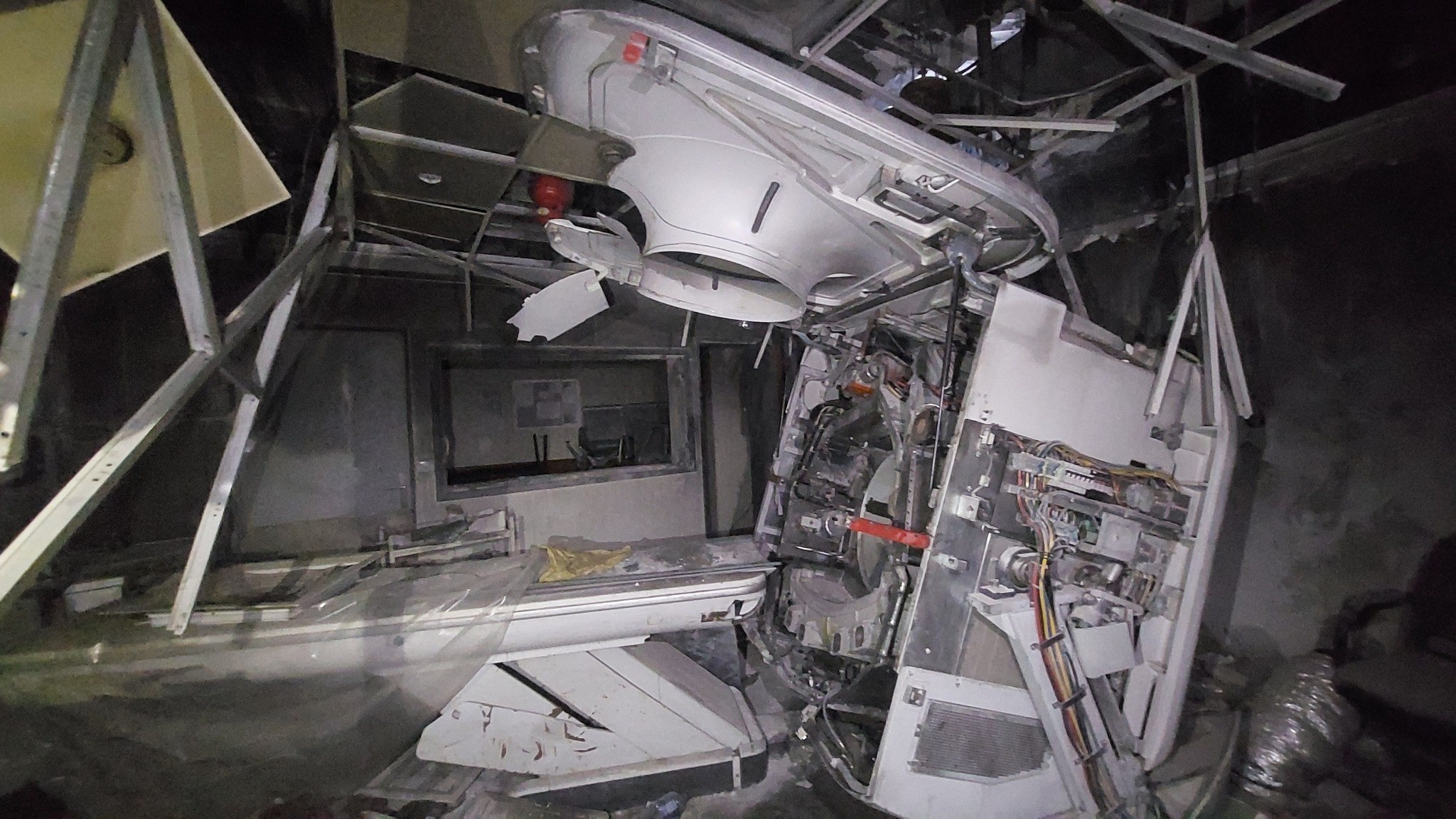
The Independent Commission for Human Rights (ICHR) warns of the severe decline in the availability of computed tomography (CT) scanning services in the Gaza Strip, and the serious risks this poses to the lives of patients and injured persons and to their right to timely access to diagnosis and treatment. This comes amid the widespread collapse of the healthcare system as a result of the genocidal war, including attacks on, destruction of, and disruption to hospitals, healthcare facilities, and medical personnel, in addition to restrictions imposed on the entry of medical equipment, spare parts, fuel, and essential operational supplies.
Before the genocidal war, 18 CT scanners were available across the Gaza Strip, distributed among several hospitals and healthcare facilities. However, ICHR’s field monitoring up to 27 September 2026 found that only three scanners remain effectively available to provide this service: one at the Arab Baptist Hospital in Gaza City, another at Nasser Medical Complex in Khan Younis, and a third at Hamad Hospital, which is operating only partially. This represents a severe decline in the diagnostic capacity available to the population and has concentrated a vital medical service in only two fully operational facilities across the Gaza Strip.
The acute shortage of functioning scanners has increased pressure on the remaining facilities, prolonged waiting times, and increased referrals and movement between hospitals, thereby exacerbating the risks of delayed diagnosis, treatment, and medical and surgical interventions, particularly for emergency and life-threatening cases. This is especially concerning given that the three remaining scanners require spare parts and maintenance that are currently unavailable.
ICHR considers that the continuation of this situation constitutes a serious infringement of the effective enjoyment of the right to health, the right to life, and the right to timely access to adequate healthcare. The continued operation of the remaining scanners under sustained pressure also risks their failure, which could further undermine the healthcare system’s ability to provide essential diagnostic services.
ICHR stresses that the continuation of this situation constitutes a grave violation of the effective enjoyment of the rights to health and life, both of which are guaranteed under international human rights instruments, particularly Article 12 of the International Covenant on Economic, Social and Cultural Rights. Moreover, operating the few remaining scanners under continuous pressure while depriving them of regular maintenance and spare parts threatens their complete breakdown, potentially leaving the Gaza Strip facing a total collapse of diagnostic capacity.
Accordingly, ICHR calls on the World Health Organization, the United Nations, the International Committee of the Red Cross, international humanitarian and health organizations, and States Parties to the Geneva Conventions to take urgent action and exert pressure on the Israeli occupying power to ensure the protection of the health sector in accordance with its obligations under Articles 55 and 56 of the Fourth Geneva Convention, including its obligation to ensure the provision of medical supplies to the population and to ensure the functioning of medical institutions, and to facilitate their provision where the resources of the occupied territory are inadequate.
ICHR further calls for the urgent entry of new CT scanners and their geographically equitable distribution to meet the needs of the population in the northern, central, and southern parts of the Gaza Strip; the repair and reactivation of non-functioning scanners; and the provision of spare parts, specialized technicians, fuel, and the energy required to ensure their continuous operation.


