
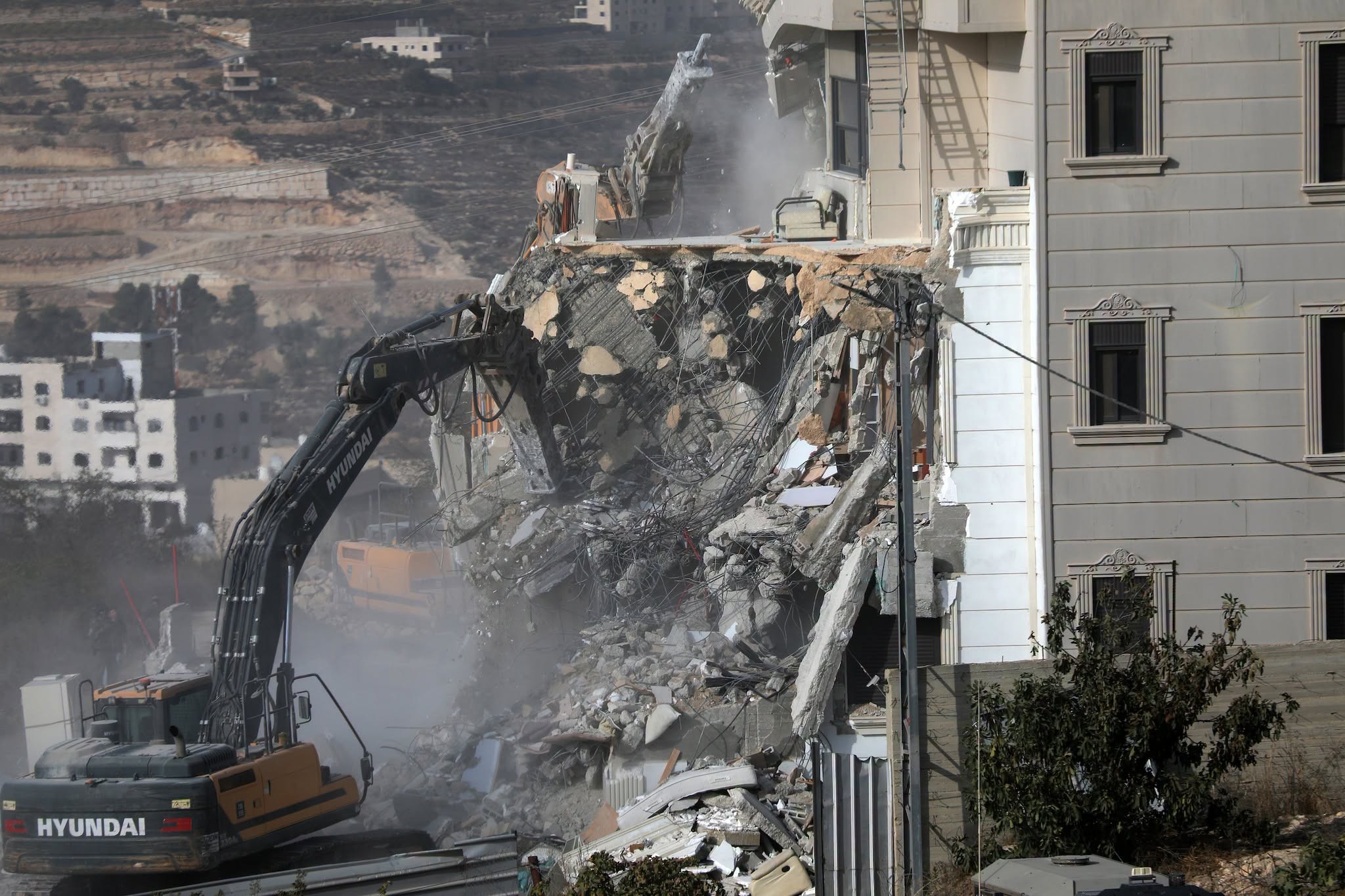
The Independent Commission for Human Rights (ICHR) condemns the grave crimes and violations committed by Israeli occupation forces in the city of Hebron, following the armed operation on Friday, 23 October 2026. These violations include the closure of the city and its entrances, the evacuation of entire residential neighbourhoods, the demolition of homes and other structures, raids on homes and the arrest of Palestinian residents, the seizure of some properties, and the imposition of severe restrictions on the movement of civilians. The ICHR stresses that these measures constitute collective punishment, prohibited under international humanitarian law, and that the forcible transfer of civilians and the unlawful destruction of property constitute war crimes and, in the current context, bear the hallmarks of crimes against humanity.
Available information indicates that hundreds of families have been forced to evacuate their homes in the Jalda and Ain Deir Baha neighbourhoods, while residential buildings and commercial establishments have been demolished in the Farsh al-Hawa area, amid threats to expand evacuation and demolition operations. The ICHR warns that these measures threaten the Palestinian presence in the city, deprive families of their homes and livelihoods, and expose residents to grave humanitarian risks, particularly women, children, older persons, and persons with disabilities, who face heightened risks as a result of displacement, loss of shelter, and difficulties accessing essential services.
The ICHR stresses that the events unfolding in Hebron cannot be separated from an announced Israeli policy aimed at expanding displacement and destruction operations across the occupied West Bank. Israeli Prime Minister Benjamin Netanyahu and Israeli Defence Minister Israel Katz have announced their intention to apply to Hebron's neighbourhoods the military model implemented in the northern West Bank refugee camps, including the evacuation of residents and the destruction of infrastructure. Israeli Finance Minister Smotrich has also announced that he issued instructions to demolish buildings as a means of deterrence and to exact a heavy price in response to the armed operation.
The ICHR considers these statements confirmation of an organised policy aimed at punishing and displacing the civilian population and destroying their property. This is particularly concerning in light of previous statements by the Israeli Defence Minister regarding the evacuation of residents and the destruction of infrastructure in West Bank cities and refugee camps, as well as the widespread destruction in the Jenin, Tulkarm, and Nur Shams refugee camps, which resulted in the displacement of tens of thousands of Palestinians and prevented them from returning to their homes.
The ICHR affirms that the unlawful forcible transfer of civilians and the extensive destruction of property not justified by military necessity constitute war crimes under Article 8 of the Rome Statute of the International Criminal Court and serious violations of the Fourth Geneva Convention, particularly Articles 49, 53, and 147. Article 33 of the Convention also prohibits collective punishment. Furthermore, these acts bear the hallmarks of crimes against humanity under Article 7 of the Rome Statute, particularly the crimes of forcible transfer of population and persecution, in light of the recurring pattern of violations and official statements openly endorsing and seeking to expand this policy. These circumstances necessitate an international criminal investigation into the crimes committed and the individual criminal responsibility of those involved.
The ICHR warns that the continuation of this policy threatens to alter the demographic and geographic character of Hebron in the context of settlement expansion and the de facto annexation of Palestinian land. It recalls the advisory opinion issued by the International Court of Justice on 19 July 2024, which affirmed the unlawfulness of Israel's continued presence in the Occupied Palestinian Territory and the obligations of states not to recognise the unlawful situation or render aid or assistance in maintaining it.
Accordingly, The ICHR calls for the following:
- The immediate cessation of displacement, demolition, and collective punishment operations, the lifting of unlawful closures and restrictions, the safe return of displaced families to their homes, and the provision of urgent protection and assistance to those affected.
- Urgent intervention by the United Nations and the States Parties to the Fourth Geneva Convention to take practical measures to protect the civilian population, halt violations, and fulfil their obligations not to support the unlawful situation in the Occupied Palestinian Territory.
- An urgent investigation by the Prosecutor of the International Criminal Court into the crimes of displacement and destruction, as well as statements and orders issued by Israeli political and military officials, as potential evidence of an organised policy and of individual criminal responsibility for the crimes committed.
- A call upon Palestinian official institutions and human rights organisations to coordinate and consolidate their efforts to document violations, assist affected persons, and prepare legal case files to pursue accountability for those responsible before international mechanisms.
The ICHR stresses that the events unfolding in Hebron constitute a serious warning of the potential expansion of the policy of displacement and destruction from refugee camps in the northern West Bank to other Palestinian cities. Merely condemning these crimes without taking effective measures to stop them and hold those responsible accountable entrenches impunity and paves the way for further war crimes and crimes against humanity against the Palestinian people.


