
The Palestinian NGOs Network has issued a new fact sheet entitled: “The Extent to Which the Interventions of Palestinian Non-Governmental Organizations in Temporary Learning Spaces Align with the Core Humanitarian Standard (CHS).”
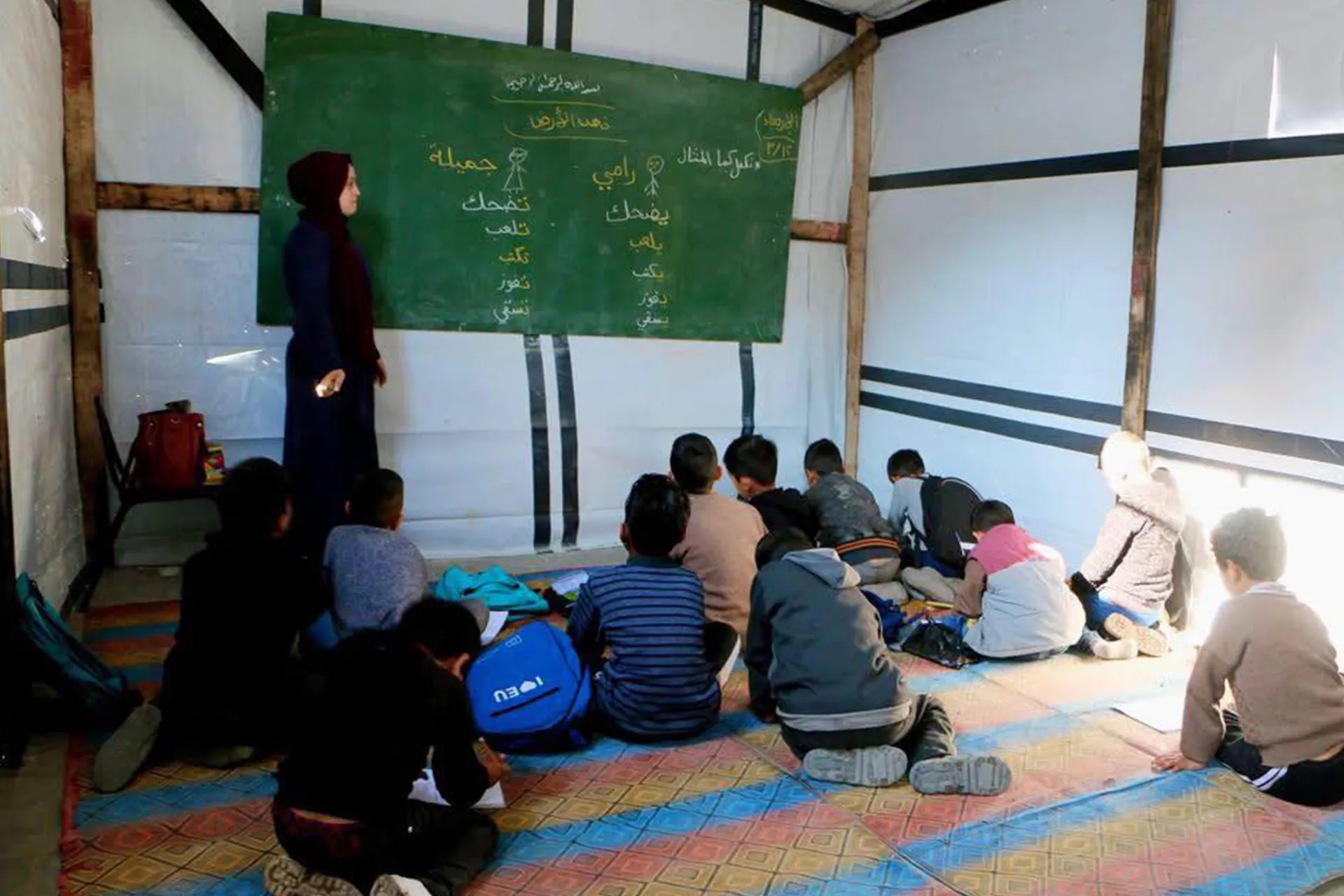
The fact sheet highlights the scale of challenges faced by NGOs in maintaining the continuity of the educational process, as data indicates that 97% of schools in the Gaza Strip have suffered varying degrees of damage, and that most Temporary Learning Spaces operate in non-ideal environments such as tents or damaged buildings, with severe limitations in resources and funding. It further documents that approximately 259,000 children received educational services in 705 Temporary Learning Spaces up to August 2025, despite the extremely difficult humanitarian conditions.
The findings show that NGOs achieved varying levels of adherence to the Core Humanitarian Standard, with strong performance in areas such as strengthening local capacities (80%), learning and continuous improvement (77%), and coordination with the Ministry of Education and humanitarian actors (76%). In contrast, the fact sheet reveals pressing gaps in other commitments, including resource management (68%) and timely response (67%), largely due to insufficient funding and limited access to essential learning materials and basic children’s needs.
The fact sheet also sheds light on major challenges facing temporary educational environments, most notably resource shortages (97%), lack of security and stability (90%), and weaknesses in infrastructure, in addition to the repeated interruption of students’ learning due to displacement and dangerous field conditions. It stresses that these challenges threaten the quality of education and limit organizations’ ability to provide inclusive and equitable educational services for all groups, including children with disabilities and girls.
The fact sheet calls for strengthening child protection, securing safe humanitarian corridors to ensure children’s access to Temporary Learning Spaces, and providing essential educational materials and learning tools. It also emphasizes the need to enhance cross-sectoral coordination to ensure a safe and inclusive learning environment. Furthermore, it highlights the importance of developing flexible educational emergency plans and specialized training programs for teachers on education in emergencies and psychosocial support.
The fact sheet concludes by affirming that strengthening the readiness of the education sector in the Gaza Strip requires more integrated responses, sustainable funding, and a participatory approach that places children's rights and dignity at the core of humanitarian interventions.


