
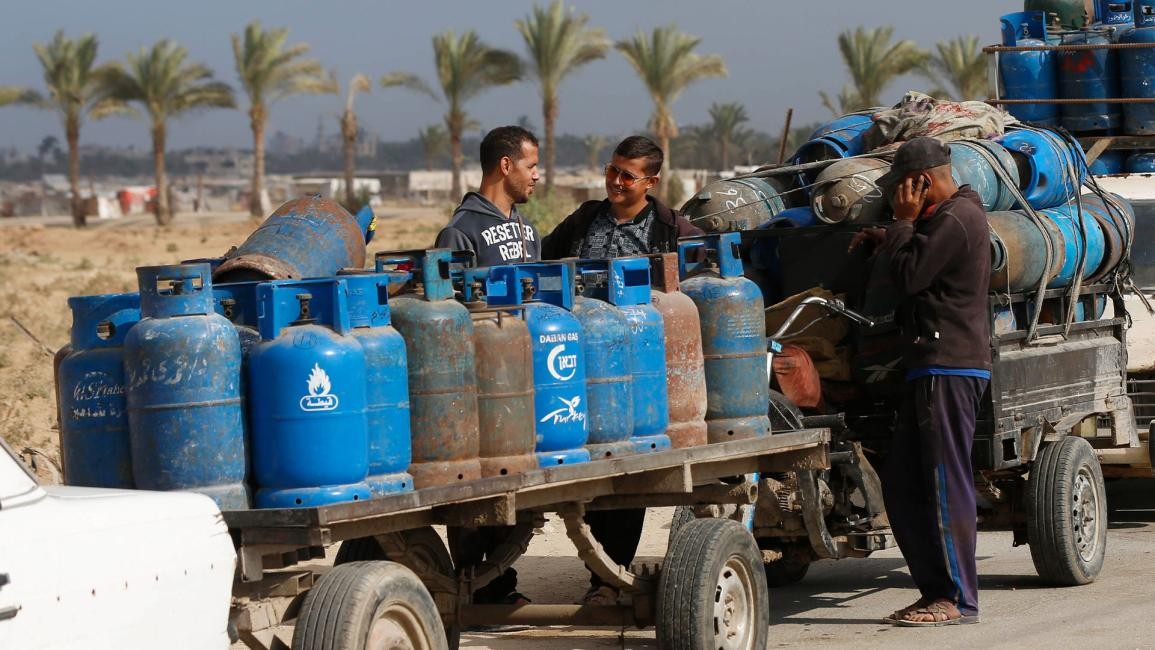
Al-Dameer Association for Human Rights is following with grave concern the ongoing acute shortage of cooking gas supplies in the Gaza Strip and the serious humanitarian consequences resulting therefrom, which directly affect civilians’ rights to a dignified life, health, and food. This situation persists amid the restrictions imposed by the Israeli occupation forces on the entry of this vital material, despite the entry into force of the ceasefire and the announced understandings for a period of 66 days.
According to information obtained by Al-Dameer, based on the testimony of Mr. Ismail Ragheb Al-Thawabta, Director General of the Government Media Office, since the ceasefire came into effect and until 6 December 2025, the Israeli occupation has allowed only 104 trucks of cooking gas to enter the Gaza Strip. This is an extremely low and dangerous figure that fails to meet the minimum basic humanitarian needs of the population and is inconsistent with what was agreed upon. Under the announced understandings and agreements, 660 trucks of cooking gas were supposed to enter during the same period, meaning that what actually entered does not exceed approximately 16% of the agreed quantity.
The approved allocation for each family is 8 kilograms of cooking gas per distribution cycle, provided only once per cycle, due to the severe scarcity of quantities entering the Strip through the Kerem Shalom crossing.
Since the beginning of the genocidal war on the Gaza Strip, the Israeli occupation has permitted only limited, intermittent, and irregular quantities of cooking gas to enter. The total quantities allowed since the start of the war to date are estimated at approximately 24,000 tons over a period of 26 months. In contrast, around 206,000 tons of cooking gas should have been allowed to enter during the same period, meaning that the level of compliance has not exceeded less than 12% of the required amount. Accordingly, the quantities that have entered fall far short of the Strip’s natural needs and are grossly inadequate for a population of approximately 2.4 million people.
This acute shortage has further exacerbated the humanitarian crisis, directly affecting households, hospitals, bakeries, and community kitchens, and threatening the food and health security of hundreds of thousands of families.
When comparing the current situation with the quantities of cooking gas that entered the Gaza Strip prior to the war—specifically in 2022—the scale of the deliberate deterioration becomes evident. During that year, approximately 95,000 tons of cooking gas entered the Strip over a single year, at relatively stable monthly rates, without such levels of deficit or interruption.
Al-Dameer Association for Human Rights affirms that the restrictions imposed on the entry of cooking gas into the Gaza Strip constitute a grave violation of international humanitarian law, particularly the Fourth Geneva Convention of 1949, which obliges the occupying power to ensure the provision of food, medical supplies, and materials essential for the survival of the civilian population. These restrictions amount to collective punishment under Article (33) of the Fourth Geneva Convention and violate the obligations incumbent upon the occupying power under international human rights law, including the right to an adequate standard of living, the right to health, and the right to food.
The continued reduction and prevention of the entry of cooking gas, despite the availability of mechanisms and capacity for supply, constitutes the unlawful use of starvation and the deprivation of civilians of essential goods as a means of pressure, amounting to a serious violation that may rise to the level of a war crime. Accordingly, Al-Dameer Association for Human Rights calls for the following:
- The international community and the High Contracting Parties to the Fourth Geneva Convention, including the parties sponsoring the understandings, to assume their legal and moral responsibilities and exert effective pressure on the occupation to end policies of collective punishment.
- Compelling the Israeli occupation to immediately and fully comply with the announced understandings and agreements and to allow the agreed quantities of cooking gas to enter without delay or restriction, in full adherence to the implementation of the humanitarian protocol in the Gaza Strip, and to ensure the immediate and safe entry of humanitarian aid and essential supplies for affected civilians.
- Ensuring a regular and sustainable flow of cooking gas commensurate with the population size and the needs of vital sectors.


