
Palestinian Prisoners’ Day, observed annually on 17 April, comes approximately two weeks after the adoption of a law permitting the death penalty of prisoners, and amid the continued escalation of grave violations accompanying the ongoing genocide perpetrated by Israeli occupation forces since October 2023. These violations target Palestinian detainees in Israeli prisons as well as the broader civilian population in the occupied Palestinian territory. In this context, Al Mezan Center for Human Rights calls upon the international community to act decisively to halt these ongoing violations and to end the Israeli occupation, in accordance with the advisory opinion of the International Court of Justice.
As part of an escalating pattern of violations, and alongside extensive legal amendments introduced since October 2023 to legitimize abuses against Palestinian detainees and shield perpetrators from accountability, the Israeli Knesset approved the death pnalty law on 30 March 2026 in its second and third readings, rendering it final and enforceable. The law is inherently discriminatory, designed to apply exclusively to Palestinians and not Israelis, thereby violating the International Convention on the Elimination of All Forms of Racial Discrimination. Furthermore, the denial of the right to appeal for individuals sentenced to death contravenes Article 14(5) of the International Covenant on Civil and Political Rights, which guarantees the right to have convictions and sentences reviewed by a higher tribunal. Its discriminatory character is further underscored by the denial of the possibility of pardon. Moreover, permitting the issuance of death sentences by majority vote rather than unanimous judicial agreement reflects an intention to facilitate the imposition of such penalties.
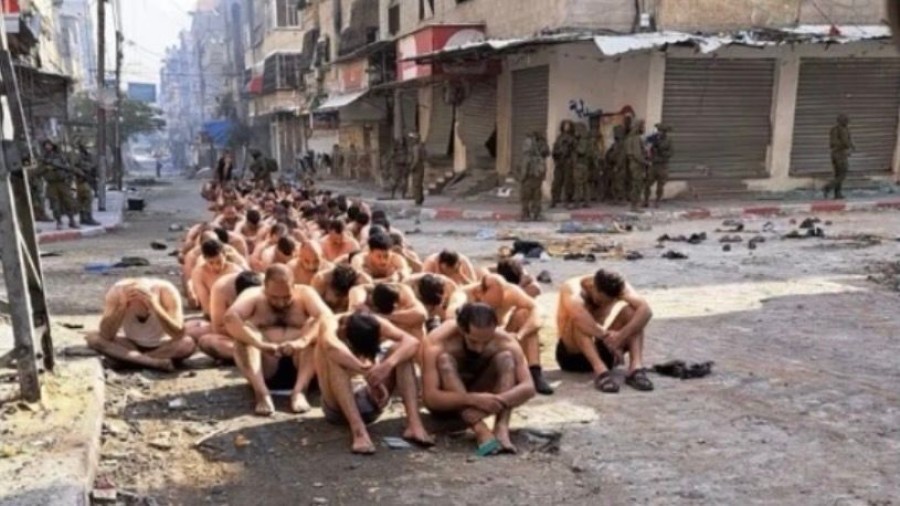
Within this context, Al Mezan has documented, over approximately 30 months of ongoing genocide in the Gaza Strip, a widespread and systematic pattern of increasingly severe violations. These abuses begin at the moment of arrest, where detainees are often forced to strip naked, subjected to physical assault and verbal abuse, and in some cases taken to active military zones while bound and blindfolded. They are then exposed to harsh environmental conditions, including prolonged exposure to extreme heat or sharp gravel, and subjected to severe forms of physical and psychological torture. Documented methods include beatings with tools, stress positions, removal of fingernails, the use of dogs, prolonged suspension, and exposure to loud noise, as well as instances of sexual violence, including rape, as reported in Sde Teiman camp. Detainees are also held under conditions amounting to cruel, inhuman, and degrading treatment, including deprivation of sleep, inadequate bedding, denial of regular hygiene, insufficient food and water, overcrowding, and denial of family and legal visits.
According to data issued by prisoners’ institutions, since the onset of the genocide in October 2023, Israeli forces have arrested more than 23,000 Palestinians, including over 800 women and more than 1,700 children. These figures do not include thousands of detainees from the Gaza Strip, including women and children. At least 89 detainees whose identities have been confirmed have died in custody, including 40 from Gaza, while the authorities continue to withhold the identities and bodies of numerous others. Thousands of Palestinians in the West Bank, including East Jerusalem, are held under administrative detention without charge or trial. Similarly, thousands from Gaza are detained under the so-called “unlawful combatant” law, without knowledge of the charges against them or the duration of their detention.
Israeli authorities continue to detain more than 9,600 Palestinians, including 350 children and 84 women. Of these, more than 3,500 are held under administrative detention and over 1,200 under the “unlawful combatant” law, all without charge or trial. These figures exclude detainees from Gaza who are subjected to enforced disappearance.
It is also noteworthy that hundreds of healthcare workers—including doctors, nurses, paramedics, and administrative staff—have been detained. Cases such as Dr. Hossam Abu Safiya, Marwan Al-Hams, and physicians who died under torture, such as Adnan Al-Bursh, constitute stark evidence of grave violations of the protections afforded under the Additional Protocol II to the Fourth Geneva Convention, which prohibits targeting medical and humanitarian personnel.
Al Mezan affirms that the violations committed against Palestinian detainees amount to war crimes under the Rome Statute of the International Criminal Court, particularly as they constitute grave breaches under Article 147 of the Fourth Geneva Convention, including willful killing, torture, inhuman treatment, and the intentional infliction of severe suffering or serious injury to body or health. These acts also represent serious violations of international legal standards governing the treatment of persons deprived of their liberty, including the United Nations Standard Minimum Rules for the Treatment of Prisoners, and form part of the broader ongoing genocide.
While warning against the enforcement of the death penalty law, Al Mezan calls upon the international community to break its silence and assume its legal and moral responsibilities regarding the unprecedented scale and severity of violations occurring in the occupied Palestinian territory. It urges the adoption of effective measures capable of compelling Israeli authorities to rescind the death penalty law and to halt all ongoing violations, particularly the continuing genocide.
Accordingly, Al Mezan calls upon the international community to fulfill its legal and moral obligations by taking immediate action to end the ongoing violations against Palestinian detainees, to halt the genocide in the Gaza Strip, and to address the escalation of war crimes in the West Bank, including those perpetrated by settlers under the protection of occupation forces. It further emphasizes the urgent need to adopt effective measures to ensure the protection of persons safeguarded under the Fourth Geneva Convention. In addition, it calls on the United Nations General Assembly and Security Council to take concrete steps to implement the advisory opinion of the International Court of Justice issued in July of last year, which affirmed the illegality of the occupation and the necessity of its immediate termination, as well as to support ongoing investigations by the International Criminal Court and to enforce the arrest warrants issued in relation to crimes committed in the occupied Palestinian territory.


