
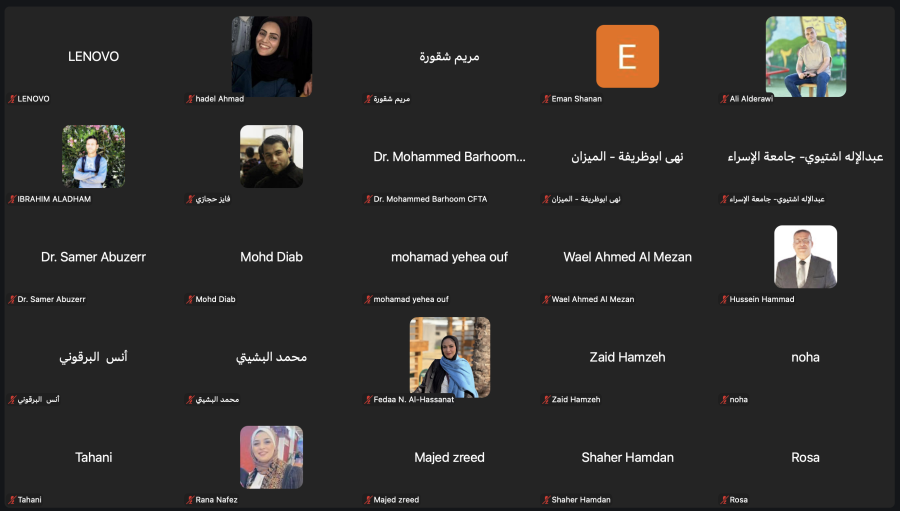
Al Mezan Center for Human Rights organised a workshop titled “The Role of Civil Society Organisations in Providing Health Services during the Genocide and Current Challenges,” held via Zoom. The workshop focused on the catastrophic deterioration of health conditions in the Gaza Strip resulting from the widespread destruction of hospitals, health centres, and infrastructure, alongside the continued prevention and obstruction of humanitarian aid entry. These restrictions have been accompanied by severe shortages of medicines, medical supplies, and fuel, as well as restrictions on patients’ movement, depriving thousands of patients and injured persons of the care and treatment they urgently need.
In his opening remarks, Mr. Issam Younis, Director of Al Mezan Center for Human Rights, welcomed the participants and speakers and commended the efforts of health institutions for providing life-saving interventions amid the catastrophic conditions facing civilians. He highlighted the continued commission of crimes in plain sight, targeting women, children, and men, and involving the destruction of homes, infrastructure, places of worship, and schools. Younis stressed that the workshop aimed to shed light on the health situation in the Gaza Strip, particularly in light of the series of Israeli attacks, measures, and restrictions imposed on the right to health, and the continuing humanitarian suffering of patients and their families.
Younis stressed that the absence of accountability and justice for crimes committed in the Occupied Palestinian Territory continues to encourage the occupying State to persist in violations and crimes against the civilian population and their property. He noted that such conduct not only violates international law but also undermines the principles established by the international community to promote international peace and security. He described the ongoing genocide in the Gaza Strip as the gravest of crimes, given the scale of the atrocities and suffering inflicted on the Palestinian population. Despite this, no meaningful progress has been made towards accountability. Instead, when Palestinian human rights organisations carried out their work and pursued accountability before the International Criminal Court, they were subjected to US sanctions.
For his part, Dr. Ahmad Muhanna, Director of the Health and Community Services and Programmes Sector at Al-Awda Health Association, outlined the main obstacles and challenges facing the organisation in providing health services, including shortages of medicines, medical equipment and devices, restrictions on the entry of sensitive equipment, and the continued denial of fuel and oil required to operate electricity generators. He also highlighted restrictions preventing patients from leaving the Gaza Strip to receive treatment, particularly given the lack of advanced medical services inside the Strip.
Muhanna stressed that civil society organisations, particularly those working in the health sector, are operating under exceptional conditions. He noted that such organisations are well positioned to identify vulnerabilities within communities and assess their needs, and are striving to mobilise their resources to maximise health services and medical interventions amid the deliberate targeting of the health system and the continued imposition of a tightened closure on the Gaza Strip.
Dr. Bassam Zakout, Director of Medical Relief in the Gaza Strip, presented key health indicators demonstrating the severity of the humanitarian situation resulting from the extensive damage to hospitals across the Gaza Strip. He noted that only 5 governmental hospitals, 10 field hospitals, and 14 private hospitals are currently operating, while 11 major hospitals remain out of service, including the Turkish-Palestinian Friendship Hospital, which specialised in treating cancer patients, as well as Kamal Adwan Hospital, Abu Yusuf Al-Najjar Hospital, and the European Hospital. Health services, particularly specialised diagnostic services, have significantly deteriorated. The number of CT scanners has declined to 7 out of 19, while laboratory services have been severely affected, with a deficit of approximately 70 per cent and the loss of a large number of laboratory tests.
Zakout expressed concern over the continuing shortage of medicines and its impact on people living with chronic diseases. Approximately 350,000 people in the Gaza Strip suffer from non-communicable diseases, including hypertension, diabetes, and cardiovascular diseases. Most have been affected by changes in living conditions and interruptions in medication, leaving them vulnerable to complications resulting from medicine shortages. Cancer patients face serious risks due to shortages of radiotherapy and chemotherapy and the lack of diagnostic equipment. Most cancer cases are detected at Stage III, when the disease is already advanced.
Zakout further explained that the number of critically ill patients permitted by the Israeli authorities to travel abroad for treatment remains extremely limited. Approximately 4,800 cancer patients hold official medical referrals for treatment or diagnosis outside the Gaza Strip but have been unable to leave due to stringent restrictions and the continued closure of crossings. Only a small number are permitted to leave through the Rafah Crossing, placing their lives at serious risk, with some patients losing their lives while awaiting access to treatment.
He also highlighted the impact of the deteriorating humanitarian, economic, and living conditions on vulnerable groups in displacement and shelter camps, including the spread of chickenpox and complications affecting pregnant women, among whom miscarriage rates have increased. Civil society organisations providing women’s health and maternal care services continue to respond to these diseases and complications despite severe shortages of resources and funding.
For his part, Dr. Mohammad Abu Rahma, Director of the Emergency Medical Services Department at the Palestine Red Crescent Society, outlined the main activities and interventions carried out by the Society’s teams, as well as the current obstacles and challenges they face. He reviewed the losses sustained by the ambulance fleet, noting that Israeli forces destroyed 30 vehicles, while another 25 vehicles were rendered out of service. The Society currently provides services through 42 ambulances, including 30 that operate on petrol, which is largely unavailable, and 12 that operate on diesel and are under severe pressure. The Society receives approximately 400 emergency calls each day but is able to respond to only around 300–350 due to limited resources.
Abu Rahma also highlighted the security challenges facing medical teams and the targeting of fixed and mobile medical points. Medical personnel have been targeted despite wearing the internationally recognised emblem identifying their humanitarian function. Twenty-three paramedics have been killed during the war, while others have been detained. With regard to shortages of medicines and medical supplies, 19 medical points face major challenges in providing services, particularly to patients with chronic diseases. The Society also operates six hospitals, including four field hospitals, which provide essential services such as ophthalmology and cardiac catheterisation. However, shortages of medicines and medical supplies remain a major obstacle to the Society’s work, as it continues to face significant shortages and is unable to bring in sufficient quantities.
The workshop included interventions and recommendations from speakers and participants, who stressed the importance of protecting the right to health as a fundamental and non-derogable right. They emphasised that the restrictions and attacks require urgent intervention to protect patients and medical personnel, and called for intensified documentation and international advocacy efforts concerning humanitarian issues, particularly the right to health.
At the conclusion of the workshop, Dr. Bassam Abu Jrai, who moderated the meeting, thanked all those who contributed to its success. He stressed the importance of following up on the workshop’s outcomes and translating them into effective advocacy measures and tools that contribute to strengthening the resilience of the health sector and facilitating access to essential medical supplies and equipment, thereby helping to protect the lives of patients in the Gaza Strip.


