
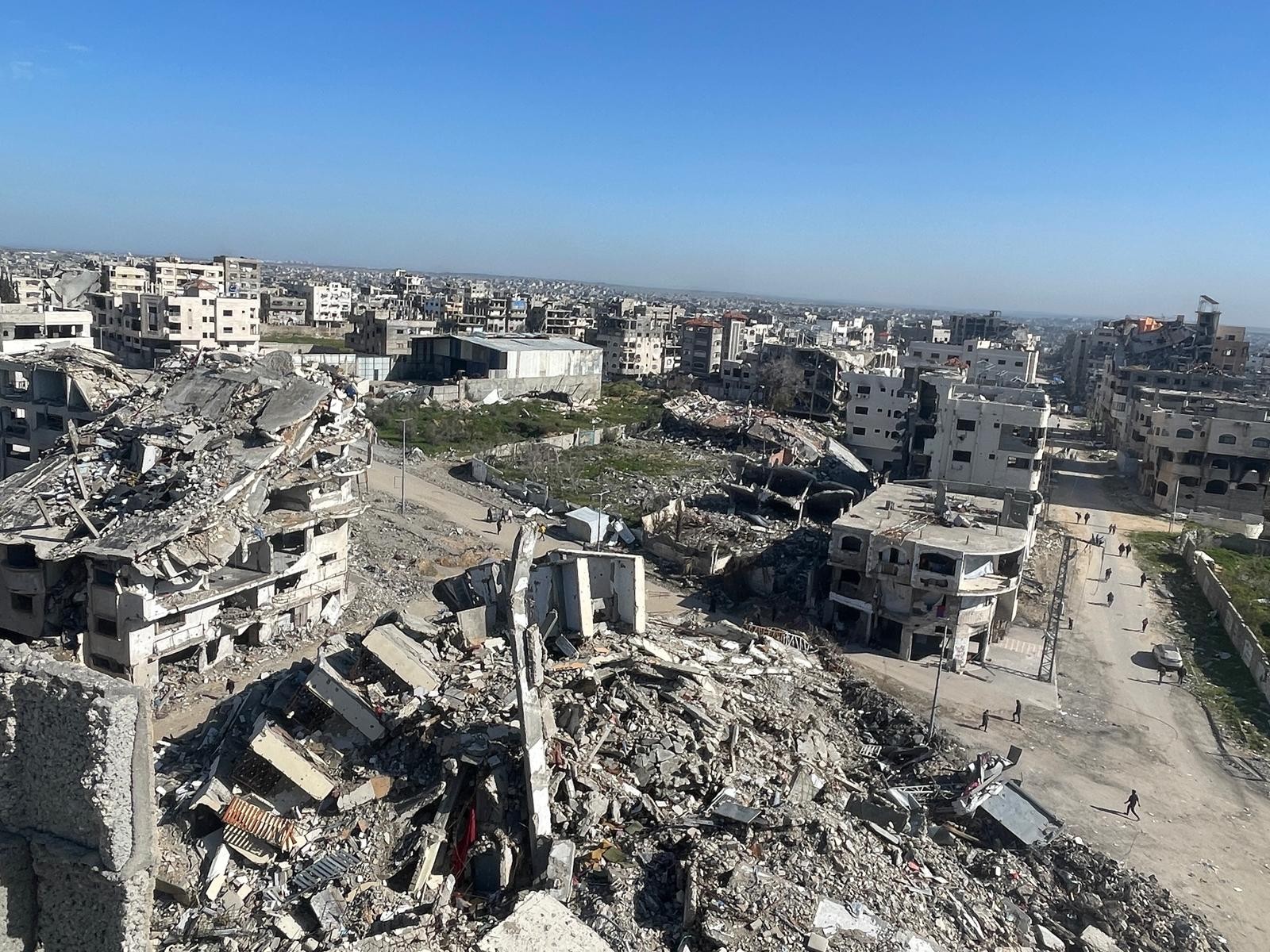
Al Mezan Center for Human Rights strongly condemns the escalating military attacks targeting Palestinian civilians, including displaced persons, in residential homes, shelters, tents, and gatherings of people across various areas of the Gaza Strip. Between Saturday and the issuance of this statement on Monday, 19 October 2026, these attacks killed 12 Palestinians and injured 36 others. These developments come amid the continued deterioration of humanitarian and living conditions and the mounting suffering of the population as a result of restrictions on the movement of people, commercial goods, and humanitarian aid. The Rafah Crossing also remains closed to passenger movement for the third consecutive week, particularly preventing patients and the wounded from travelling to receive medical treatment.
According to field information, a series of airstrikes and attacks have targeted various areas across the Gaza Strip since the early hours of Saturday, 17 October 2026, resulting in fatalities and dozens of injuries. A group of civilians was targeted near a school in the Al-Tuffah neighbourhood, east of Gaza City, killing one Palestinian. Another group was targeted near Al-Hurriya Clinic in the same neighbourhood, killing two Palestinians and injuring others. In Deir al-Balah, in the central Gaza Strip, a group of civilians was targeted on Al-Berka Street, killing a child and injuring others. A police point near the International Committee of the Red Cross (ICRC) field hospital in the Al-Mawasi area of Rafah, in the southern Gaza Strip, was also targeted, killing one Palestinian and injuring five others.
(M. S.) reported: “My brother Tamer, my cousin (my paternal aunt’s daughter), my male cousin, and I were heading to our home east of Beit Lahia to collect some iron and wood to sell so that we could earn a little money to cover our household expenses. While we were on our way, three tanks suddenly appeared near us, and one of them began firing at us. We tried to flee, but as we were running, I saw my brother Tamer fall to the ground, with blood pouring heavily from his head. I carried him in my arms and walked approximately half a kilometre while holding him. When I reached a safe place, I discovered that he had been killed. I then took him to the hospital.”
Meanwhile, further attacks targeted a group of civilians behind Jabalia Al-Nazla Clinic in the northern Gaza Strip. A girl was killed when Israeli occupying forces opened fire on tents sheltering displaced people in Al-Maghazi refugee camp in the central Gaza Strip. A drone targeted a group of civilians on Al-Rashid Street in the Al-Shalihat area, west of Gaza City, killing one Palestinian and injuring several others. A child was also killed by Israeli army fire in the Tal al-Dhahab area of Beit Lahia, in the northern Gaza Strip. Another young man succumbed to injuries sustained from Israeli army gunfire in the town of Beit Lahia. In addition, a drone targeted two brothers who were fishing aboard their small fishing boat approximately 100 metres off the coast of the northern Al-Shati area, injuring both of them.
(A. A.) reported that her niece, two-and-a-half-year-old Mariam Ahmad Ghanem, sustained severe injuries and burns to her limbs and various parts of her body and face when her family’s apartment in the Al-Rimal neighbourhood of Gaza City was targeted in the early hours of Wednesday, 14 October 2026, causing a fire to break out inside the apartment.
She explained that Mariam was rescued from the flames but witnessed her mother, Reem Awad, burning before her eyes, an experience far beyond what a child of her age could comprehend or endure. She added that Mariam’s father had been killed at the beginning of the Israeli offensive on the Gaza Strip, while her mother had been two months pregnant with Mariam after five years of trying to conceive. As a result, Mariam lost both parents before reaching the age of three, while sustaining severe injuries and burns that left their marks on her face and body.
According to the Palestinian Ministry of Health, hospitals across the Gaza Strip received 12 people killed and 36 injured between Saturday and the date of this statement. The cumulative number of Palestinians killed since the signing of the Sharm el-Sheikh ceasefire agreement and its entry into force on 11 October 2025 has risen to 1,522, with a further 5,411 injured.
The Rafah crossing has now remained closed for the third consecutive week, from 2 October until the date of this statement. During this period, no patients or wounded persons have been able to leave the Gaza Strip to receive medical treatment outside it, and travellers have been unable to return.
The impact of this closure extends beyond denying patients and the wounded access to specialised medical services unavailable within the Gaza Strip. It also affects thousands of patients whose medical conditions require urgent travel abroad for treatment, at a time when Gaza’s healthcare system is being systematically devastated and depleted. Hospitals and medical centres face acute shortages of medicines, medical supplies, and equipment, while their capacity to provide essential healthcare services and treat critical cases continues to deteriorate. These conditions heighten the risks to patients’ lives, worsen their medical conditions, and increase the likelihood of death as treatment is delayed or rendered inaccessible.
The continued restrictions on movement through the crossing not only prevent patients and the wounded from leaving for treatment but also obstruct the return of Palestinians stranded outside the Gaza Strip to their families and homes, depriving them of their right to return to Gaza. Many remain trapped in prolonged uncertainty and waiting, amid exceptionally harsh humanitarian and living conditions.
Since 15 October and until the date of this statement, the entry of commercial goods into the Gaza Strip has been suspended, while limited quantities of humanitarian aid and fuel have continued to enter under humanitarian coordination arrangements. The suspension of commercial supplies has directly affected local markets, resulting in shortages of numerous essential commodities, particularly fruit, meat, and vegetables. This has driven prices up and further undermined the population’s ability to obtain basic food and other necessities.
Binda Nanda, Vice-Chair of the United Nations Committee on the Exercise of the Inalienable Rights of the Palestinian People, stated: “In Gaza, one year after the ceasefire took effect, civilians continue to live amid devastation, displacement and profound uncertainty. A mass collective punishment inflicted on an entire population. Israeli strikes continue to claim lives. The health system remains under enormous strain. Humanitarian access continues to face restrictions. And recovery and reconstruction remain far below what is urgently needed.”
Al Mezan Center for Human Rights strongly condemns the escalation of Israeli crimes, the continued targeting of civilians and the killing and injuring of Palestinians, attacks on civilian objects and infrastructure across the Gaza Strip, and the continued indiscriminate gunfire directed at civilians and their property. The Center further condemns the deliberate exacerbation of the humanitarian and health crises through restrictions on the entry of commercial goods and medical supplies, the closure of the Rafah Crossing, and the obstruction of medical evacuations for patients and the wounded.
The Center stresses the imperative of ending the genocide, ensuring effective protection for the population, opening crossings regularly and safely, permitting the unimpeded entry of humanitarian aid and medical supplies, and facilitating the evacuation of patients and the wounded whose conditions require treatment outside the Gaza Strip. These measures are essential to safeguarding the rights to life, health, and human dignity.
Accordingly, Al Mezan calls on the international community to take urgent and effective action to halt the ongoing and escalating massacres; exert pressure on the Israeli occupying forces to end the crime of genocide; ensure the entry of humanitarian aid, fuel, and medical equipment; facilitate the evacuation of patients and the wounded; and provide effective protection for civilians who have been subjected to genocide in full view of the world for the third consecutive year.


