
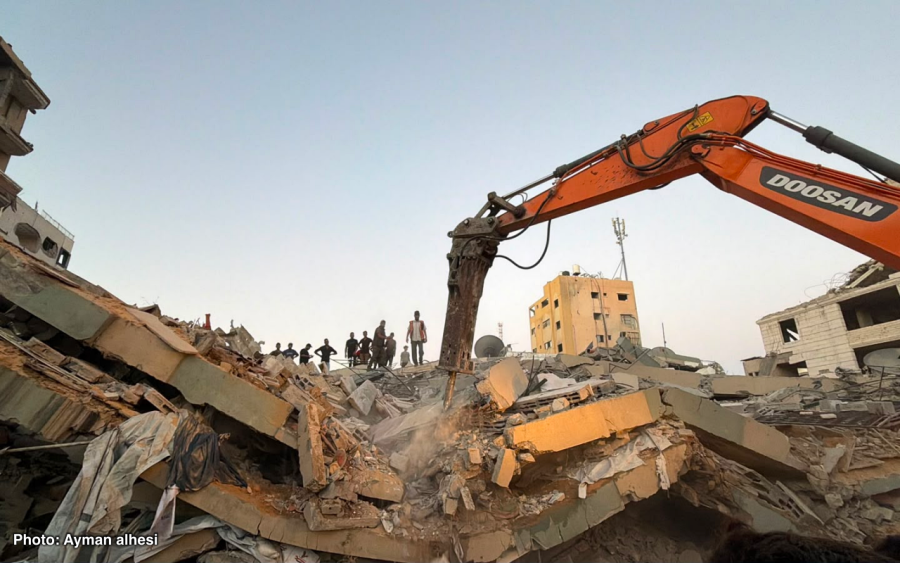
The scale of the atrocities committed during the genocide in the Gaza Strip continues to unfold, with the rubble left behind standing as a stark testament to an unprecedented human catastrophe. Nearly three years on, the bodies of thousands of Palestinians remain buried beneath the ruins of residential buildings, unable to be recovered by Civil Defence teams due to the lack of heavy equipment. The teams also face significant difficulties identifying human remains recovered after bodies have decomposed, in addition to the absence of DNA testing equipment.
Severe weather systems compound the humanitarian catastrophe, flooding displacement tents and causing bomb-damaged buildings to collapse on displaced Palestinians who have sought shelter inside them. Floods and torrential rains also risk washing away human remains and erasing any trace of them, while the absence of essential equipment leaves Civil Defence teams unable to respond effectively to these extreme weather conditions.
According to the monitoring and documentation conducted by Al Mezan Center for Human Rights, specialised teams managed to recover approximately 103 bodies between 5 and 23 September 2026 from beneath the rubble of Al-Taj Tower (3), a seven-storey building, and four neighbouring houses in the al-Yarmouk neighbourhood of Gaza City. Most of the victims were women and children. Their bodies had remained buried under the rubble for three years following the Israeli Occupying Forces' bombardment of the area without prior warning on 25 October 2023. At the time, rescue teams were unable to reach and recover the victims due to the ongoing, intense bombardment and the lack of equipment required to deal with the scale of destruction and retrieve those trapped beneath the rubble. Only 28 of the recovered bodies could be preliminarily identified, while the remaining bodies were buried as unidentified.
The crime involving Al-Taj Tower is one among countless atrocities committed in locations where specialised teams have been unable to recover victims' bodies for multiple reasons. Chief among these is that such locations fall within areas under Israeli control, which extend across approximately 70 per cent of the northern, southern, and eastern parts of the Gaza Strip, as well as the severe shortage of adequate equipment and tools, particularly those required to establish the identities of the deceased. Bodies remaining beneath the rubble of destroyed buildings, coupled with the inability to determine their identities and numbers, add to the growing number of missing persons whose fate remains unknown. This compounds the suffering of Palestinian families, who are left in a state of agonising uncertainty over the fate of their missing loved ones, unable to relinquish hope of finding them. This prolonged uncertainty inflicts profound emotional and human suffering.
The tragedy of Al-Taj Tower, one of hundreds of buildings destroyed over the heads of their inhabitants, stands as evidence of the international community's abandonment of Gaza's civilian population. The consequences have extended beyond the killing of civilians to the decomposition of their bodies beneath the rubble of their homes and the inability to identify them. At the same time, this tragedy exposes the sheer scale and brutality of the genocidal war waged against the Gaza Strip and the disregard for civilians protected under the Fourth Geneva Convention. The Convention imposes binding obligations on the occupying power that cannot be derogated from under any circumstances. These include ensuring that the dead are recovered and buried in accordance with the religious rites of their faith, investigating the circumstances of their deaths, and providing the necessary information to facilitate their identification.
More than three years on, the genocide continues through killing, destruction, and the deliberate deprivation of the population of the basic necessities of life. The entry of heavy machinery remains prohibited, while the entry of food, medicine, and mobile housing units is restricted. At the same time, diagnostic and medical testing equipment, including DNA testing devices, is denied entry, further preventing families from determining the fate of their loved ones.
Al Mezan Center for Human Rights strongly condemns the continued genocide in the Gaza Strip and stresses that the international community can no longer remain silent in the face of the scale and gravity of Israeli crimes. The international community must fulfil its legal and moral obligations towards the population of the Occupied Palestinian Territory, particularly in the Gaza Strip, and take effective decisions and measures to ensure an end to the genocidal war, which is now entering its fourth consecutive year, and address its devastating consequences.
These measures must include ensuring the recovery of all bodies, facilitating the return of displaced persons to their places of residence, providing them with all the necessities required to sustain life, holding war criminals accountable, ensuring justice and reparation for victims, and undertaking the reconstruction of the Gaza Strip.


